Will Municipalized Utilities Actually Work Better?
Anger is brewing in Southeast Michigan over protracted utility outages from a recent storm. It’s not a new story– this seems to happen every year or two at this point. While DTE’s own reliability numbers from FERC suggest that the average customer is only without power for a few hours a year, these numbers are skewed by major storm events that knock out power for multiple days to thousands, if not tens of thousands, of customers. It’s sparked a discussion– again, not a new one, but one that comes up every time this happens- about the question of public power, which could involve a municipal or quasi-non-governmental agency taking control of local distribution or even generation infrastructure.
What’s A “Natural” Monopoly? And Why Won’t Deregulation Save Us?
Utilities are considered “natural monopolies” because they operate a lot of very capital-intensive, long-lived, specialized portfolios of assets to generate, transmit, and distribute power. The libertarian bro crying about how utilities need to be deregulated to make the market more competitive evidently has no idea how it would look to have ten sets of power lines running down your street instead of just one. In other words, there’s at least a logistical reason for why these monopolies exist.
But there is room for some quite pointed deregulation. One big problem is that many markets with a local distribution monopoly don’t have to have a generation monopoly. In other words, you pay a fixed rate to distribute each kilowatt hour of electricity to your crib, but you can select different providers of power– sometimes this is big utility companies generating the power, and sometimes it’ll be a 100% renewable power generator.
Michigan doesn’t have this. It’s not clear to me exactly why, beyond the corrupt relationship between DTE and the legislature, which is frequently discussed and never actually addressed.
Disparities: Where It Works Versus Not
We’ve been lucky in Southwest Detroit. My wife’s theory is that the grid is more resilient given the proximity to the higher density areas of downtown, Corktown, and the Ambassador Bridge customs plaza. It makes sense. We average maybe a couple of hours of outages per year. Is it less than the DTE service territory average? Yes. We’ve never– since 2018- had any multiple-day outages.
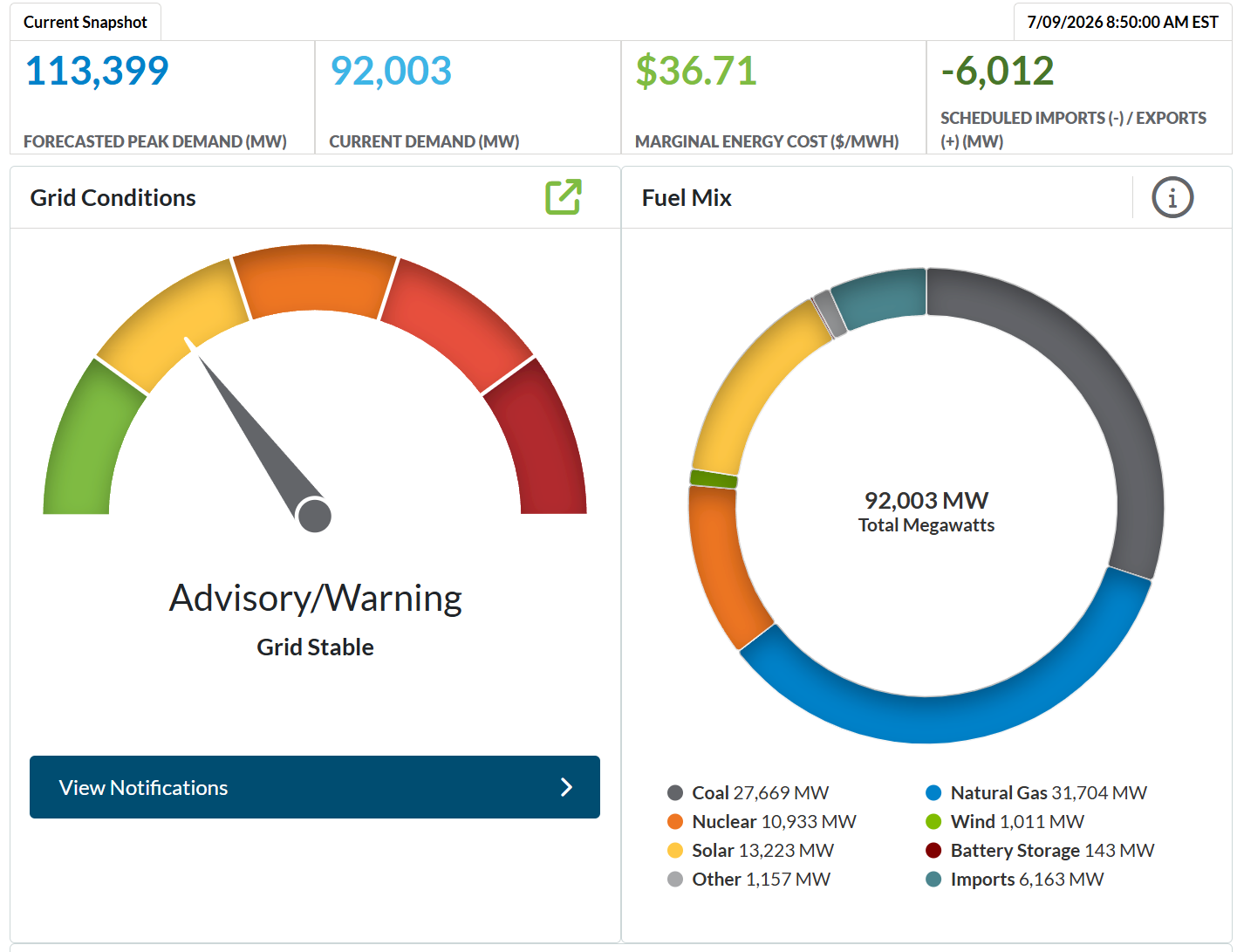
In some ways, we’ve been luckier in Lansing, where the Board of Water and Light administers our electricity, water, and sewer. Our rates are about 10% lower than DTE’s, but both are extremely expensive. How expensive?
I occasionally chat with BWL staff. They come across as well-meaning, under-resourced and a little disorganized, and ultimately not very helpful. One person told us about an exciting new program they had that would send an energy auditor out to complete a blower door test on our house, so we could figure out measures for an energy retrofit. It was funded through a Department of Energy grant.
I was ecstatic. Finally!
But when the auditor arrived, he said that, no, they don’t do blower door test. They don’t even have a blower door. He knew all about blower door testing and had all of the certifications. He was very helpful as far as talking about solutions for the house– but none of these solutions were ones that were offered by BWL.
This is a common problem with many of the publicly owned utilities in the United States. They lack the resources of giant corporations, and are often a bit more languid without the pressure to compete in the marketplace. This is a broad characterization to which I’m sure there are many exceptions. But BWL is stuck in the Michigan mindset of conservation and innovation being, well, not very important.
What It Might Look Like
The reality is that it’s extremely unlikely that anyone will ever be able to take over a public utility at a municipal level within my lifetime, in a society that can’t be bothered to fund healthcare but has no problem funding endless foreign wars over dumb shit.
The municipality, advocates propose, could simply amass a bunch of cash and stage a hostile takeover of the company.
I guess this is one approach.

Another is to forget about taking over the utility itself and work to displace a portion of its revenue stream by providing public resources to assist in the processes of decarbonization, energy conservation, IAQ improvements, water conservation, and more. This is one approach being explored by the new Ann Arbor Sustainable Energy Utility. And the DC Sustainable Energy Utility operates in a similar fashion– not as a public utility per se, but as a resource for retrofitting buildings and their systems affordably to reduce energy consumption and save money.
What Public Power Will More Likely Look Like
A legal, regulated monopoly doesn’t protect the utility from any and all potential threats to its business model. I’m not exactly an expert here, but as long as we’re avoiding violations of the Fifth Amendment’s takings clause, it seems that state and local governments– or non-governmental entities- would be well within their rights to start offering solutions to homeowners that would effectively reduce a utility’s revenue stream.
The crazy thing, though? What “they” don’t want you to know (as it were)? Is that the utilities could offer all of these things themselves, and for a fixed rate of return. A utility could contract out to private installers to do insulation retrofits. They could finance solar for a profit. They could do all of these things.
But DTE is run by a collective of unimaginative doofuses who are comfortable with their monopoly, and who also rest easy in the knowledge that nobody in Michigan is ever going to figure out a way to come at them.
You know. Unless.
Societal Priorities
It goes without saying that a lot of people complaining about this are not connecting the dots between the things we don’t spend money on at the local level, and things we do spend money on at the federal level.
For my entire life, things have been getting steadily worse for the working class, while things have been getting much better for the rich. We have perhaps the worst wealth inequality in our society ever. And we also are spending $100 billion on another stupid fucking foreign war.
How far could $100 billion go if we spent it locally?
Well, that’d cover buying a few DTEs. Reducing fossil fuel usage and improving reliability? Or, a bunch of profits for Lockheed Martin plus the climate change accelerating effects? Hmm. Tough tradeoff.